3 Web Development Paths: Frontend, Backend, Full Stack

Table of Contents
Web development is one of the most popular career options for IT students. When you start learning web design, you often hear three terms: frontend developer, backend developer, and full-stack developer.
But many students get confused about which career is better for them.
In this article, we will explain ‘frontend vs backend vs full-stack development’ in simple words and help you choose the right career path.
Frontend Development
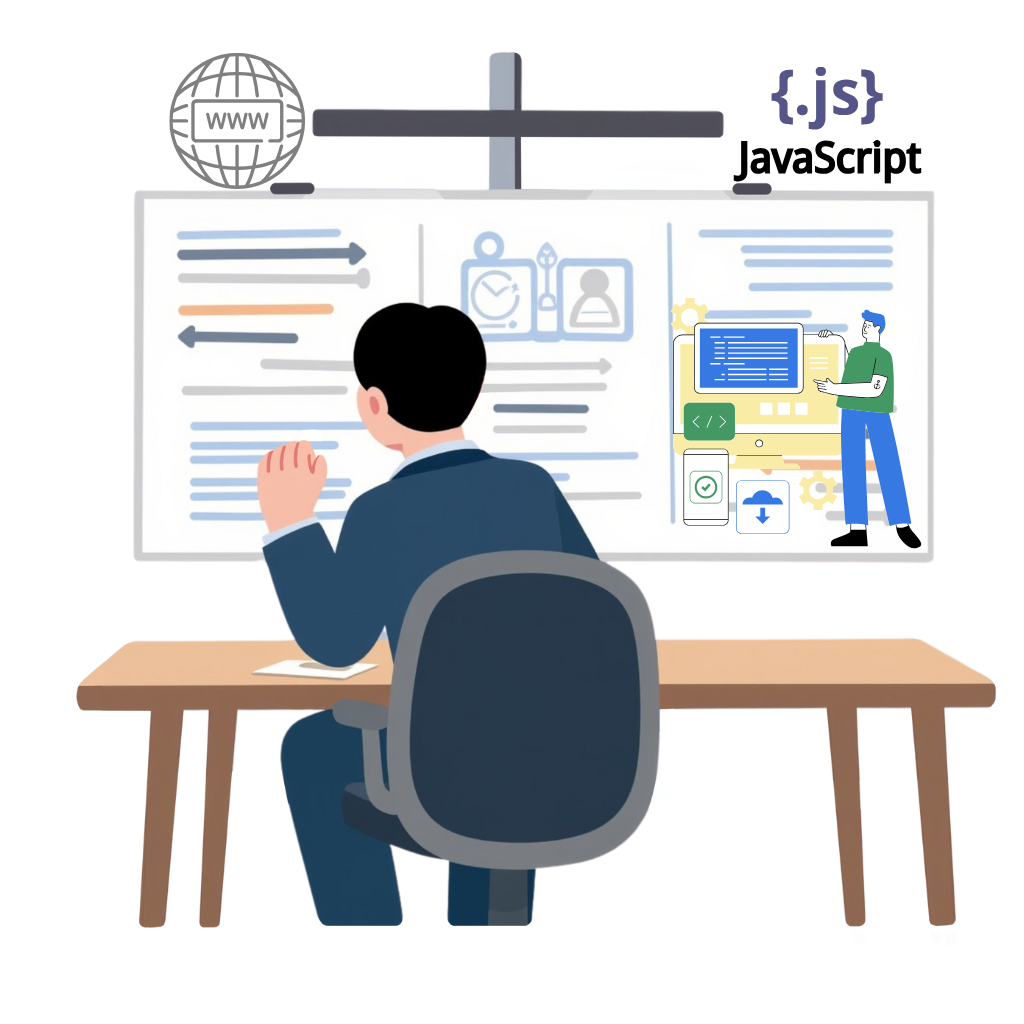
It focuses on the part of a website that users can see and interact with. It includes design, layout, text, graphics, buttons, and navigation menus. Also called a client-side developer, it uses JavaScript to make websites interactive and responsive. As a result, users can easily navigate and use web pages. It plays a key role in creating visually attractive, user-friendly, and engaging websites, which is why the demand for frontend developers is continuously growing.

- Best for: Visually orientated individuals who appreciate immediate feedback and enjoy creating beautiful, user-friendly interfaces.
- Focus: User-facing parts (UI/UX), design, interactivity.
- Skills: HTML, CSS, JavaScript (React, Angular, Vue), responsive design, accessibility.
Advantages:
- Instant Visual Feedback: Developers see their work right away, which is rewarding for creative people.
- Diverse Tools: A rapidly evolving ecosystem that includes popular frameworks such as React, Vue, and Angular.
- Lower initial complexity: generally easier to learn, with an emphasis on HTML, CSS, and JavaScript.
Benefits:
- Helps build strong UI/UX skills
- Easy entry point for beginners
- High demand for modern web and mobile apps
Backend Development
Backend developers work on the server-side of a website, which users cannot see. They manage servers, databases, and application logic to ensure data is stored and obtained securely. Backend development also handles user authentication, performance, and website security. Common backend technologies include Python, Java, PHP, Node.js, and databases like MySQL and MongoDB. Therefore, backend development is ideal for people who enjoy logic, problem-solving, and working with data.
- Skills: Python, Java, Node.js, SQL/NoSQL databases, cloud services, and algorithms.
- Best For: Analytical thinkers who enjoy logic, data management, complex problem-solving, and working behind the scenes.
Advantages:
- Deep Technical Challenges: Focuses on logic, algorithms, and database design.
- System Core: Manages business logic, API integrations, and data security.
- Higher Salaries: Specialised experience in technologies such as Python, Java, or Node.js frequently results in a higher salary.
- Performance optimisation, direct control over server efficiency, and data speed.
Benefits:
- Strong problem-solving abilities
- Better system and database knowledge
- Higher stability in long-term projects
Full-Stack Development
A full-stack developer works on both frontend and backend development of a website. They handle UI design, server logic, and database management. Full-stack developers know HTML, CSS, JavaScript, backend languages, and databases. Moreover, they can build, integrate, and deploy complete web applications independently. Therefore, they are highly valuable for startups and small businesses. This career offers flexibility, more opportunities, and strong long-term growth for IT students.

- Focus: Both frontend and backend (end-to-end development).
- Skills: A mix of frontend and backend technologies and system architecture.
- Best For: Those who want versatility, ownership over entire projects, and adaptability, offering high career flexibility and often better job security.
Advantages:
- Higher Salaries and Demand: There is a high demand for “Swiss army knife” developers, which generally results in higher pay.
- Efficient Development: Better communication and faster troubleshooting across the application.
- Broader Career Growth: Provides a comprehensive understanding of software design, allowing for speedier advancement to roles such as architect or project lead.
- Versatility & Job Security: Ability to handle, understand, and build complete, end-to-end applications.
Benefits:
- More job and freelancing opportunities
- Higher salary potential
- Better understanding of the full product lifecycle
Which Career Should You Choose?
(i) If you love design and creativity, choose frontend development.
(ii) If you enjoy logic and data handling, go for backend development.
(iii) If you want complete control and flexibility, choose Full Stack Development.
For More Understanding
How do you decide between pursuing a career as a frontend, backend, or full-stack developer?