Artificial Intelligence (AI) in Smart Gadgets: Revolutionizing Daily Devices

Artificial intelligence (AI) in smart gadgets has transformed from simple programmed tools into adaptive systems that learn from your behavior, anticipate needs, and automate tasks. AI is now embedded in the devices you use daily—making them smarter, more personalized, and more efficient. Today, AI is widely used in smartphones, smartwatches, smart speakers, robots, and smart home devices.
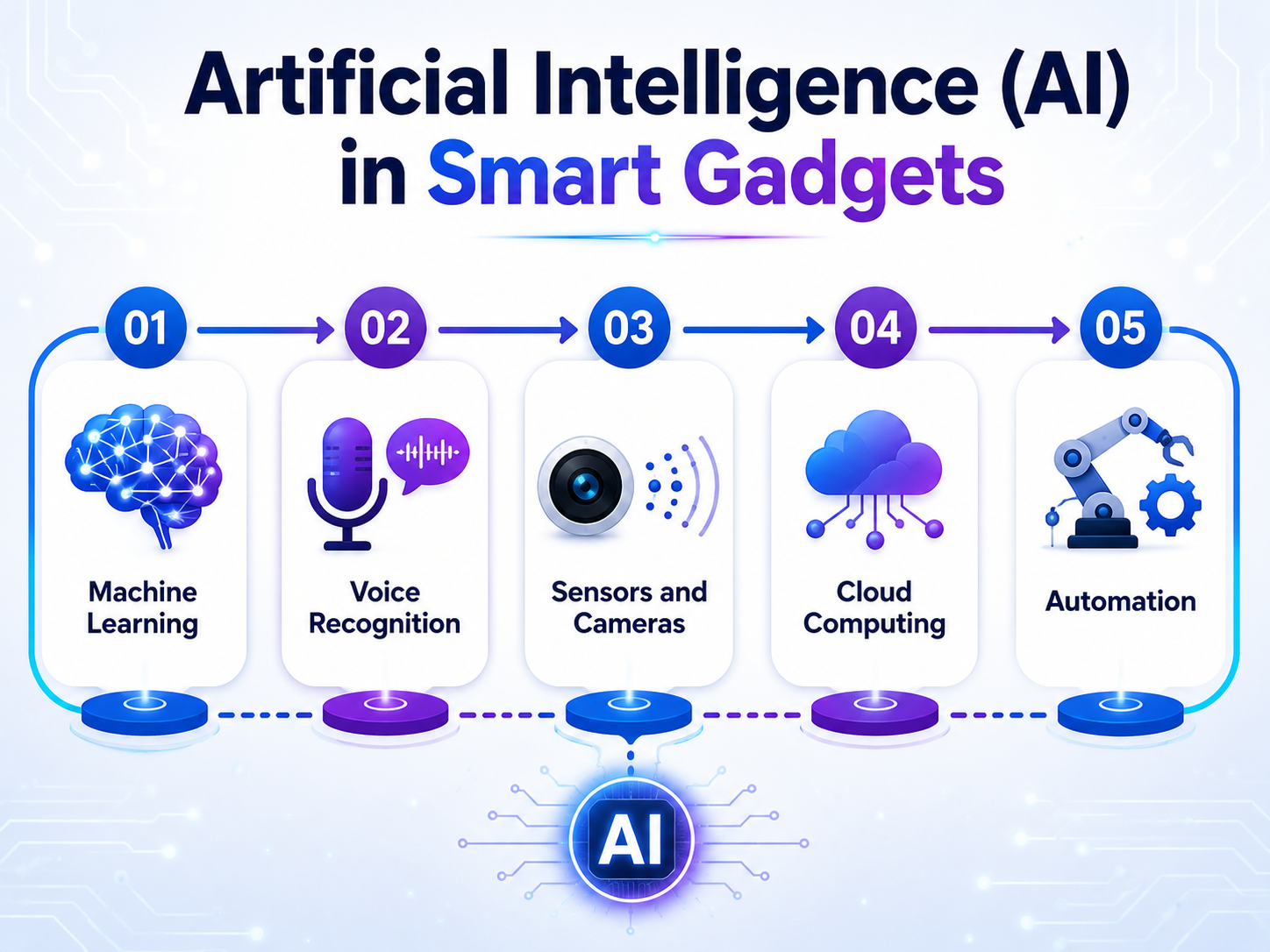
How Artificial Intelligence (AI) in Smart Gadgets Works
Machine Learning:
A smartphone learns which apps you use most often and suggests them automatically.
Voice Recognition:
Saying “Play music” to a smart speaker starts music automatically.
Sensors and Cameras:
Smartphones use sensors for auto-brightness and screen rotation.
Cloud Computing:
Saving photos on Google Drive instead of a computer hard disk.
Automation:
Smart lights turning on automatically when someone enters a room.
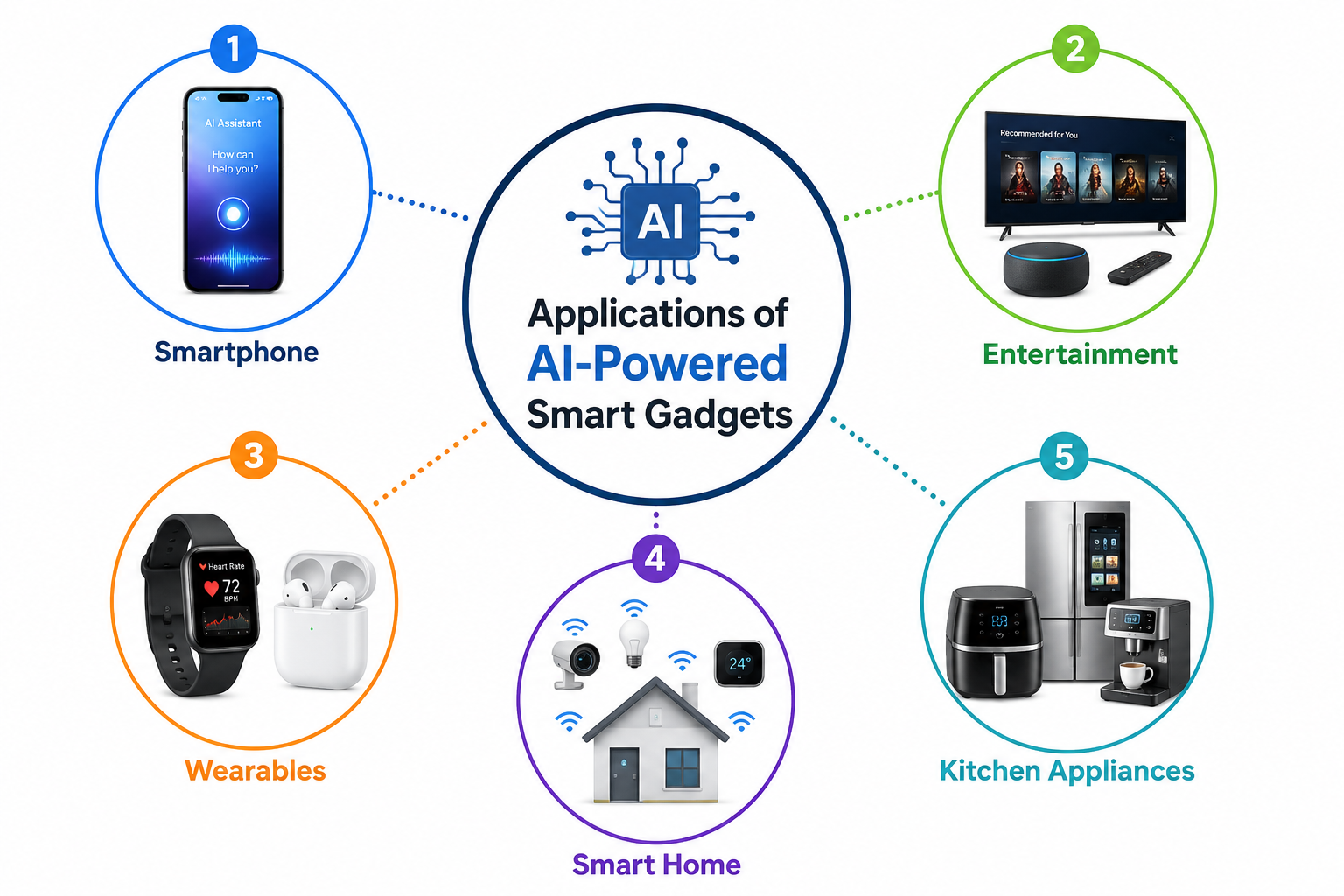
Applications of AI-Powered Smart Gadgets
| Category | Examples | AI Features |
| Smartphones | Face recognition and fingerprint unlock. AI camera enhancements. | AI analyzes facial features, eye patterns, and fingerprint details to identify the correct user quickly and safely. Computational photography (night mode, object removal) |
| Entertainment | Smart TVs, PlayStation 5, Netflix, Spotify. | Content recommendations based on habits, adaptive gameplay, realistic graphics rendering. |
| Wearables | Fitness Tracking Apple, Samsung, Watch, Smart Glasses | AI helps track heart rate oxygen/stress levels & analyzes the data and provides health insights. Smart glasses display digital information and video recording, augmented reality ( |
| Smart Home | Amazon Echo, Google Nest, Nest Thermostat, Roomba | Voice control, learning temperature preferences, auto-adjusting lighting, autonomous mapping/cleaning, anticipating routines |
| Kitchen Appliances | Samsung Family Hub fridge, smart ovens | Food inventory tracking, recipe suggestions, auto-detecting dishes/fabrics, learning brew preferences |
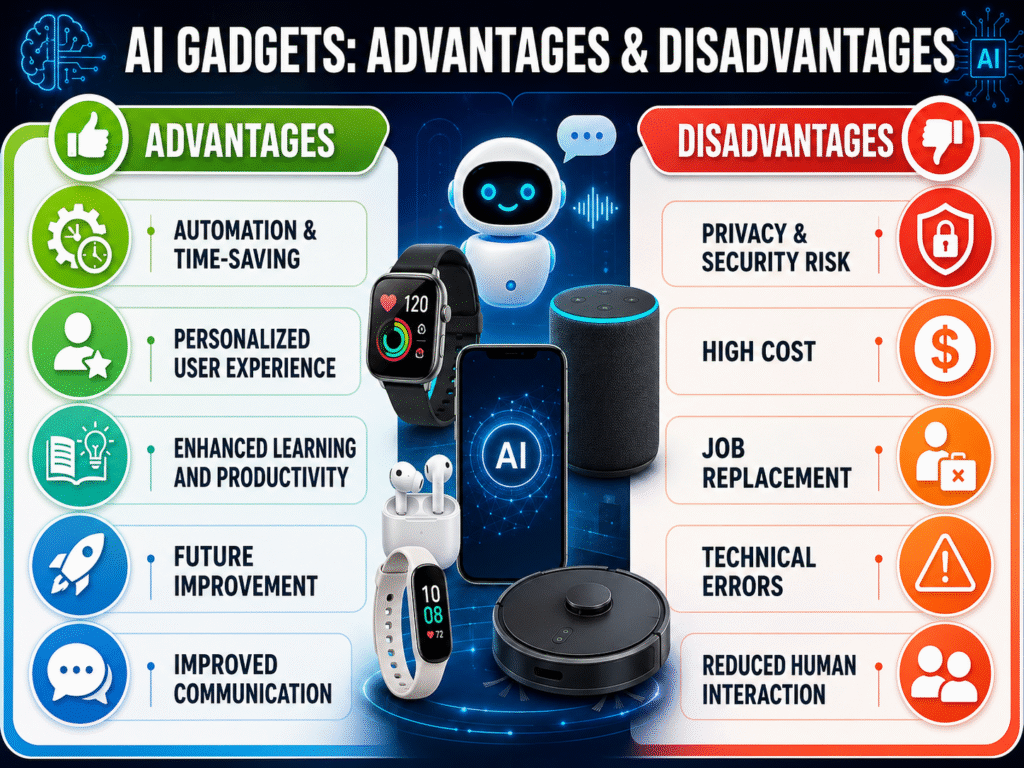
Advantages of AI Smart Gadgets
1. Automation & Time-Saving
AI smart gadgets can perform tasks automatically, reducing manual effort and saving time.
Example: Voice assistants can set alarms, search the internet, or play music instantly.
2. Personalized User Experience
These devices learn user habits and performance and provide customized recommendations.
Example: Music and video apps suggest content based on user interests.
3. Enhanced Learning and Productivity
AI applications support education and workplace productivity.
Example: AI assistants help schedule tasks and organize reminders.
4. Future Innovation
AI smart gadgets continue to evolve with advanced technologies and smarter features.
Example: Self-driving cars and AI robots are becoming more advanced every year.
5. Improved Communication
AI tools make communication faster and easier.
Example: Voice recognition allows hands-free calling and messaging.
You can also learn about Top Free AI Tools For Developers and Creators
Disadvantages of AI Smart Gadgets
1. Privacy and Security Risks
AI smart gadgets collect large amounts of personal data, which may lead to privacy issues or cyberattacks if not protected properly.
Example: Hackers may access personal information from smart devices.
2. High cost
AI devices, especially high-end models, are significantly more expensive than non-AI counterparts, making them less accessible to budget-conscious consumers.
Example: Smart home systems and AI-powered devices often cost more than regular devices.
3. Job Replacement
Automation and AI systems may reduce the need for human workers in some industries.
Example: AI robots replacing repetitive factory jobs.
4. Technical Errors
AI systems can sometimes make mistakes or fail due to software problems .
Example: Voice assistants misunderstanding commands.
5. Reduced Human Interaction
Excessive use of smart gadgets may decrease face-to-face communication.
Example: People spending more time with devices than interacting socially.
Future of AI Smart Gadgets
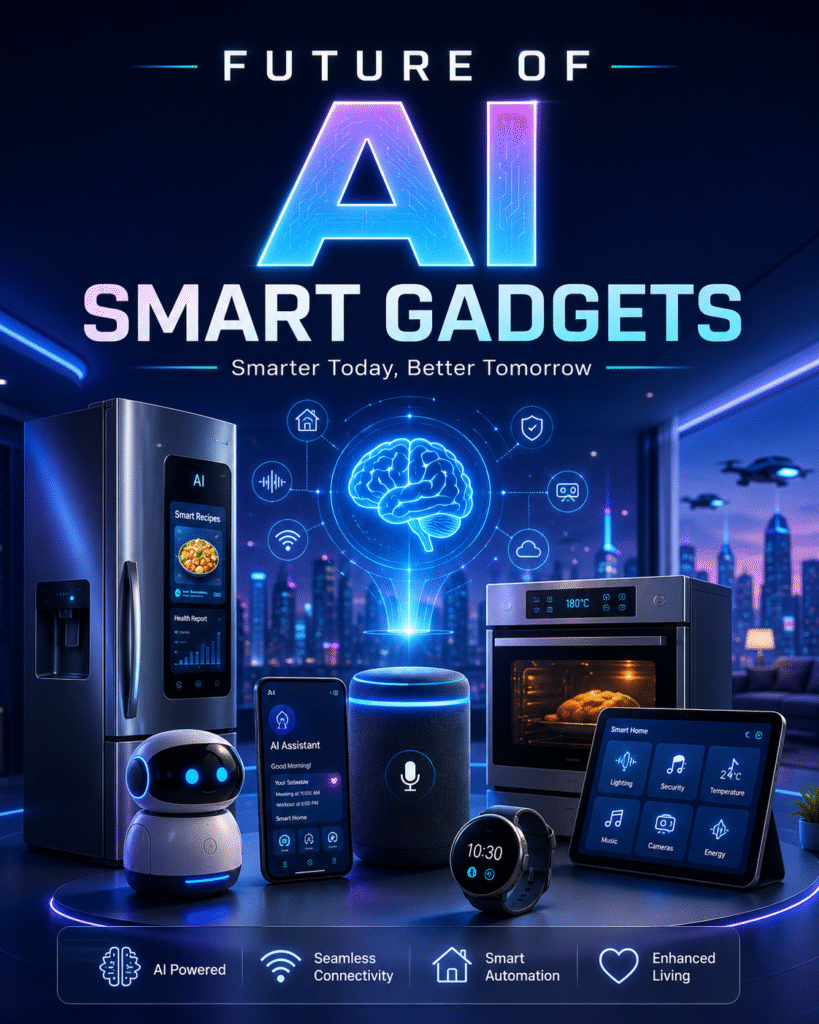
The future of Artificial Intelligence powered smart gadgets is shifting from reactive tools that follow manual commands to intuitive, autonomous partners that proactively anticipate human needs and AI smart gadgets will become more advanced and useful in the future By 2026, technology has moved beyond simple automation toward “ambient intelligence,” where devices—from health-tracking wearables and smart home systems to advanced personal assistants—continuously learn human behavior behavior to adapt in real time.
This evolution is driven by the rise of on-device (Edge) AI, which prioritizes privacy and low latency by processing data locally, and the integration of multimodal capabilities that allow gadgets to understand context through sight, sound, and even emotional cues. As these devices become increasingly interconnected and personalized, the boundary between the physical and digital worlds continues to blur, transforming our gadgets into sophisticated companions that streamline daily life, enhance personal wellness, and redefine human-technology interaction.
How AI transform Gadgets
Artificial intelligence is fundamentally transforming gadgets by shifting them from passive tools that require manual input to proactive companions that understand, learn, and anticipate user needs. This transformation is driven by several core technological shifts:
1.The Rise of “On-Device” (Edge) Intelligence instead of relying solely on the cloud, modern devices (like smartphones, laptops, and wearables) now feature specialized hardware—such as Neural Processing Units (NPUs)—that process data locally.
- Privacy & Security
- Reliability
2.From Command-Based to Context-Aware early smart devices required specific “if-this-then-that” commands. Today’s AI-integrated gadgets use multimodal inputs—sight, sound, and behavior—to understand the full context of a situation.
- Proactive Assistance
- Environmental Adaptation
3.Advanced Human-Tech Interaction AI is creating more “natural” ways for us to communicate with our technology
- Natural Language Processing (NLP)
- Computer Vision
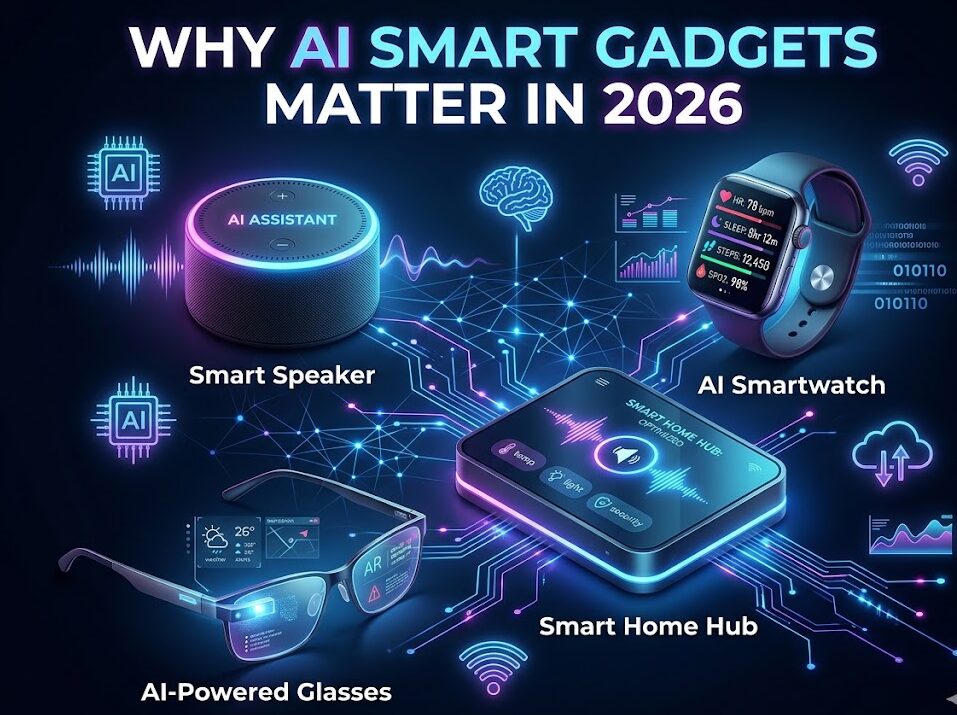
Why AI Smart Gadgets Matter in 2026+
AI smart gadgets matter in 2026+ because they have transformed from simple accessories into essential digital companions that fundamentally reshape how we live, work, and stay healthy.
- Faster and Smarter Daily.
- Better Healthcare and Fitness
- Improved Education and Learning.
- Advanced Security and Safety.
- Growth of Smart Homes and Smart Cities.