
What is SEO and Why is it important in Digital Marketing?

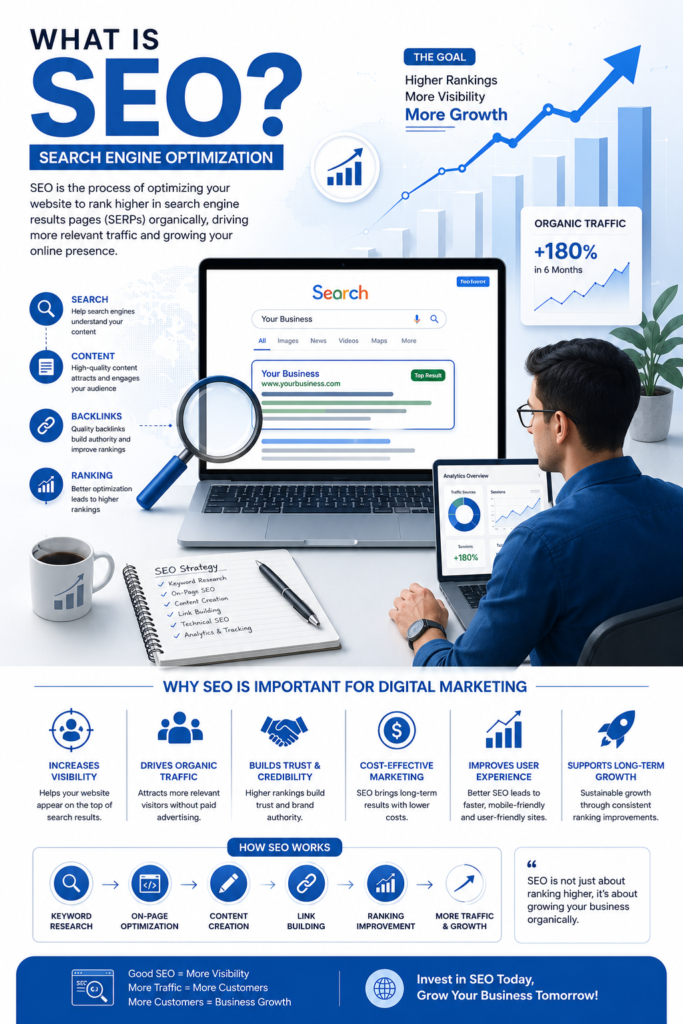
SEO (Search Engine Optimization) is the process of improving a website’s visibility on search engines like Google so that it appears higher in search results when users search for relevant keywords. SEO What is SEO and Why important in Digital Marketing involves optimizing website content, keywords, technical performance, user experience, and backlinks to attract more organic (unpaid) traffic.
(What is SEO and Why important in Digital Marketing)
SEO is important in digital marketing because it helps businesses reach their target audience at the right time, increase website traffic, build brand credibility, and generate leads or sales without relying entirely on paid advertising. A well-optimized website can rank higher in search results, making it easier for potential customers to find products, services, or information. In today’s competitive digital landscape, SEO is one of the most cost-effective and long-term strategies for growing an online presence and achieving business success.
SEO, or Search Engine Optimization, is the process of improving a website to increase its visibility when people search for products, services, or information related to that business on search engines like Google. By optimizing web pages, publishing high-quality content, and earning links from other sites, a business aims to rank higher in organic (non-paid) search results.
What is SEO?
SEO stands for Search Engine Optimization. It is the process of making your website easier to find on search engines like Google or Bing. When people search for a topic or service, SEO helps your website show up higher on the results page so you can get more visitors.
- Increase Organic Traffic
Increasing organic traffic means getting more visitors to your website from search engines without paying for advertisements. These visitors find your website naturally by searching for keywords related to your business, products, or services.
- Generate Leads and Sales
Generating leads and sales means attracting potential customers to your website and encouraging them to take action, such as filling out a contact form, subscribing to a newsletter, requesting a quote, or purchasing a product or service.
- Improve User Experience
Improving user experience means making your website easy, fast, and enjoyable for visitors to use. When users can quickly find the information they need and navigate your website without problems, they are more likely to stay longer, trust your brand, and take action.
- Helps You Stay Competitive
Helps you stay competitive means using SEO to keep your website visible, attract more customers, and stay ahead of competitors in search engine results and the digital marketplace. SEO helps your website rank higher in search results.
Why SEO is important in Digital Marketing?
SEO is important in digital marketing because it helps a website appear higher in search engine results when people search for related products, services, or information. Higher rankings increase website visibility, bringing more organic (free) traffic and potential customers. Unlike paid advertising, SEO provides long-term results and helps businesses build trust and credibility with their audience. It also improves user experience by making websites faster, more organized, and easier to navigate. By attracting the right visitors and increasing online presence, SEO plays a key role in generating leads, boosting sales, and supporting overall digital marketing success.
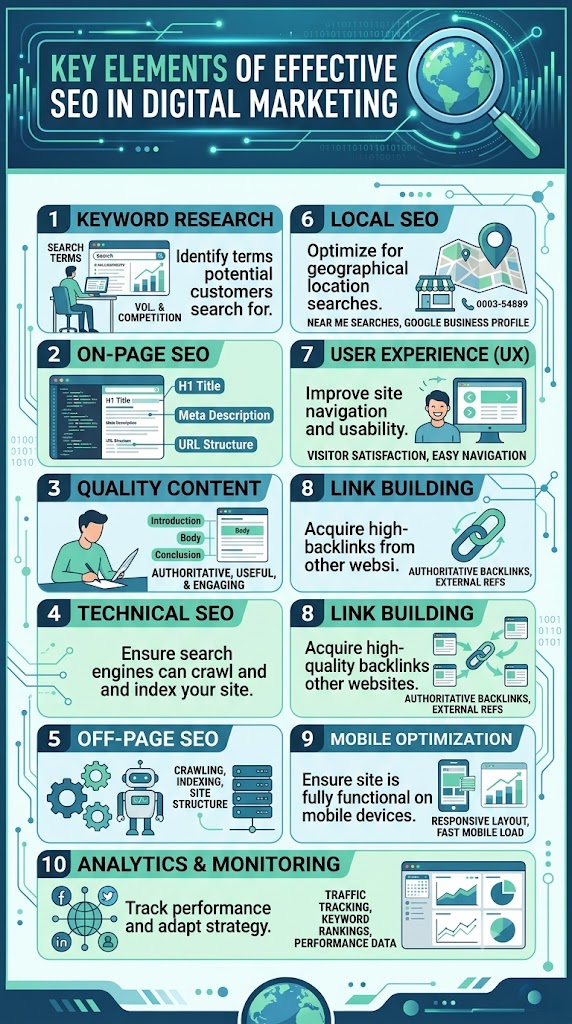
Key element in SEO
- Keyword Research
Finding the words and phrases that people search for online. - On-Page SEO
Optimizing website content, titles, headings, images, and meta descriptions with relevant keywords. - Quality Content
Creating useful, informative, and engaging content that answers users’ questions. - Technical SEO
Improving website speed, mobile-friendliness, security (HTTPS), and site structure. - Off-Page SEO
Building high-quality backlinks from other websites to increase authority and trust. - Local SEO
Optimizing a business for local searches, such as “digital marketing agency near me.” - User Experience (UX)
Ensuring visitors can easily navigate the website and find information quickly. - Link Building
Getting relevant and trustworthy websites to link back to your content. - Mobile Optimization
Making sure the website works properly on smartphones and tablets. - Analytics & Monitoring
Tracking website performance, traffic, rankings to improve SEO results.
What SEO Work in Digital marketing?
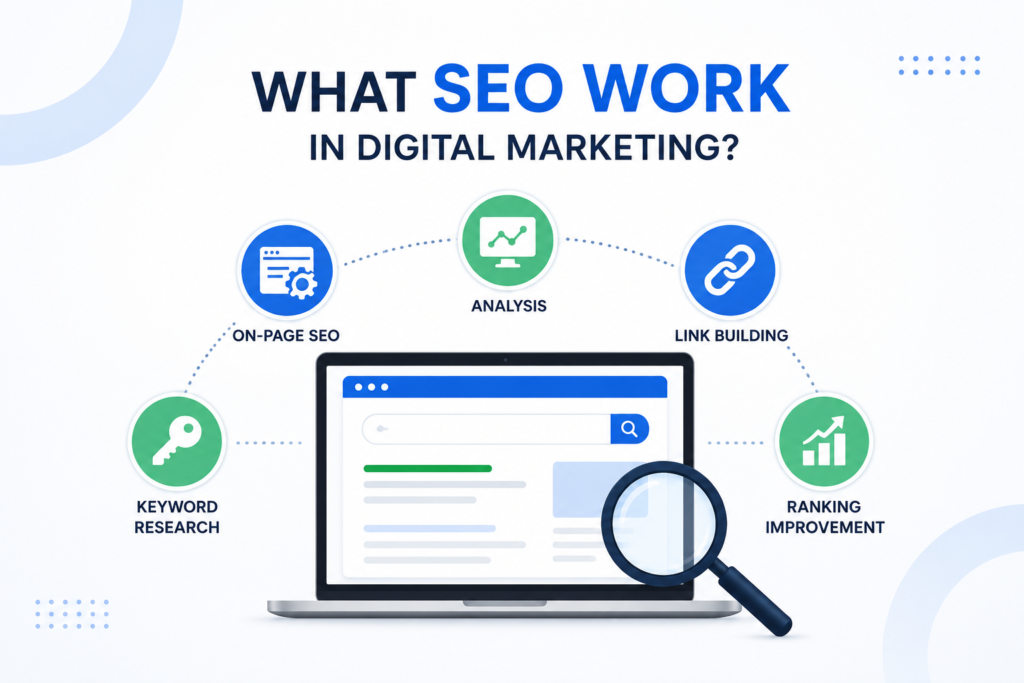
SEO helps a website become more visible on search engines like Google, making it easier for potential customers to find your business. It plays a major role in digital marketing by increasing organic traffic, improving online visibility, and attracting users who are actively searching for products or services.
SEO Based Job Opportunities in 2026 READ NOW
How SEO Works in Digital Marketing
Keyword Research
Finds the words and phrases people search for online.
Targets the right audience with relevant content.
On-Page SEO
Optimizes website content, titles, and meta descriptions.
Makes pages more search engine-friendly.
Technical SEO
Improves website speed, mobile responsiveness, security. .
Helps search engines index your website correctly.
Content Creation
Publishes valuable blogs, articles, and landing pages.
Answers users’ questions and improves search rankings.
Off-Page SEO
Builds backlinks from trusted websites.
Increases website authority and credibility.
Local SEO
Helps businesses appear in local search results.
Attracts nearby customers searching for local services.
Performance Monitoring
Tracks website traffic, keyword rankings, and user behavior.
Uses data to improve SEO performance over time.
Three Pillars of SEO
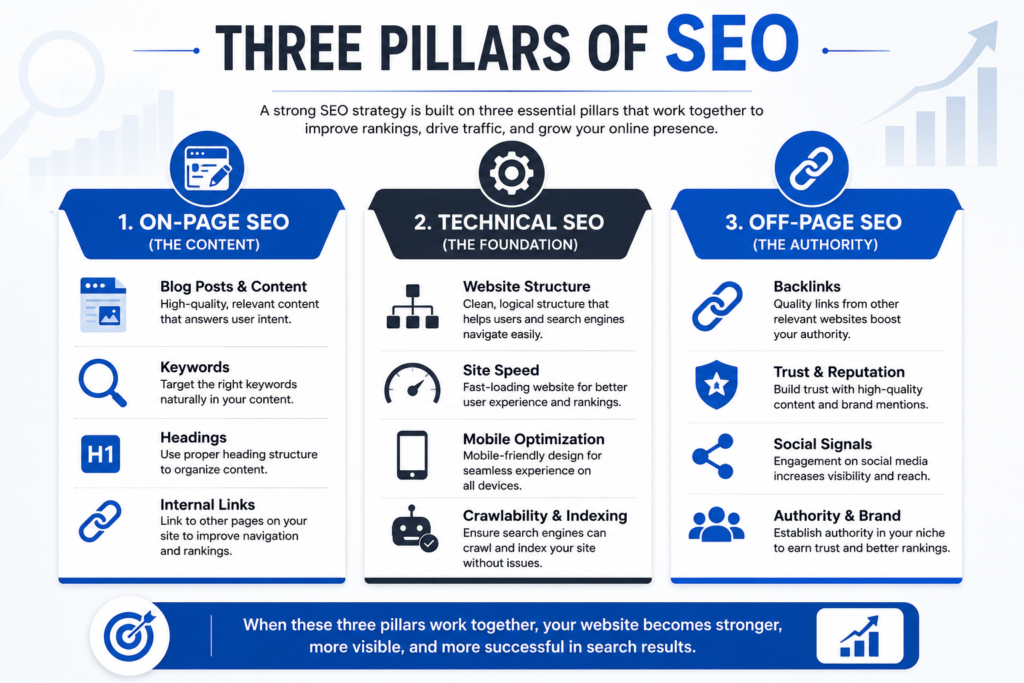
- On-Page SEO (The Content): Optimizing what is actually on your pages. This involves high-quality content, proper use of keywords, descriptive titles, header tags (H1, H2, etc.), and making sure the content satisfies the user’s intent.
- Technical SEO (The Foundation): Optimizing the “behind-the-scenes” elements. This includes site speed, mobile-friendliness, secure connections (HTTPS), clean site architecture, and ensuring search engines can easily crawl and index your pages.
- Off-Page SEO (The Authority): Building the reputation of your site across the internet. The most important aspect here is link building—earning backlinks from other reputable, high-quality websites, which signals to search engines that your content is trustworthy.
Why Does SEO Matter?
SEO matters because it helps your website get discovered by people who are actively searching for your products, services, or information. Without SEO, even a well-designed website may receive very little traffic because it is difficult to find in search engine results. By improving your website’s visibility, SEO increases organic traffic, builds trust and credibility, enhances the user experience, and attracts potential customers. It is also a cost-effective long-term.